


Choosing the right flooring for your home can be overwhelming, especially when comparing vinyl plank vs laminate. Both options offer stylish, affordable, and durable alternatives to traditional hardwood flooring. However, they have significant differences in terms of material composition, water resistance, installation, and maintenance.
In this guide, we will explore every aspect of vinyl plank and laminate flooring, helping you make an informed decision based on your specific needs.
What is Vinyl Plank Flooring?
Vinyl plank flooring, also known as Luxury Vinyl Plank (LVP) or Luxury Vinyl Tile (LVT), is a synthetic flooring option designed to mimic natural hardwood. It consists of multiple layers:
- Wear Layer: Protects against scratches and stains.
- Design Layer: Features a printed image that replicates wood grain or stone.
- Core Layer: Composed of waterproof PVC or stone plastic composite (SPC).
- Backing Layer: Adds stability and soundproofing properties.

Types of Vinyl Plank Flooring
- Rigid Core Vinyl Plank (SPC/WPC): More durable and ideal for high-traffic areas.
- Flexible Vinyl Plank: Easier to install but less sturdy.
- Peel-and-Stick Vinyl: Budget-friendly, DIY-friendly option.
- Glue-Down Vinyl Plank: Requires adhesive for installation but offers a permanent solution.
What is Laminate Flooring?
Laminate flooring is a composite product made from high-density fiberboard (HDF) with a printed decorative layer and a protective wear layer. Unlike vinyl, laminate contains natural wood byproducts, giving it a more realistic wood feel.
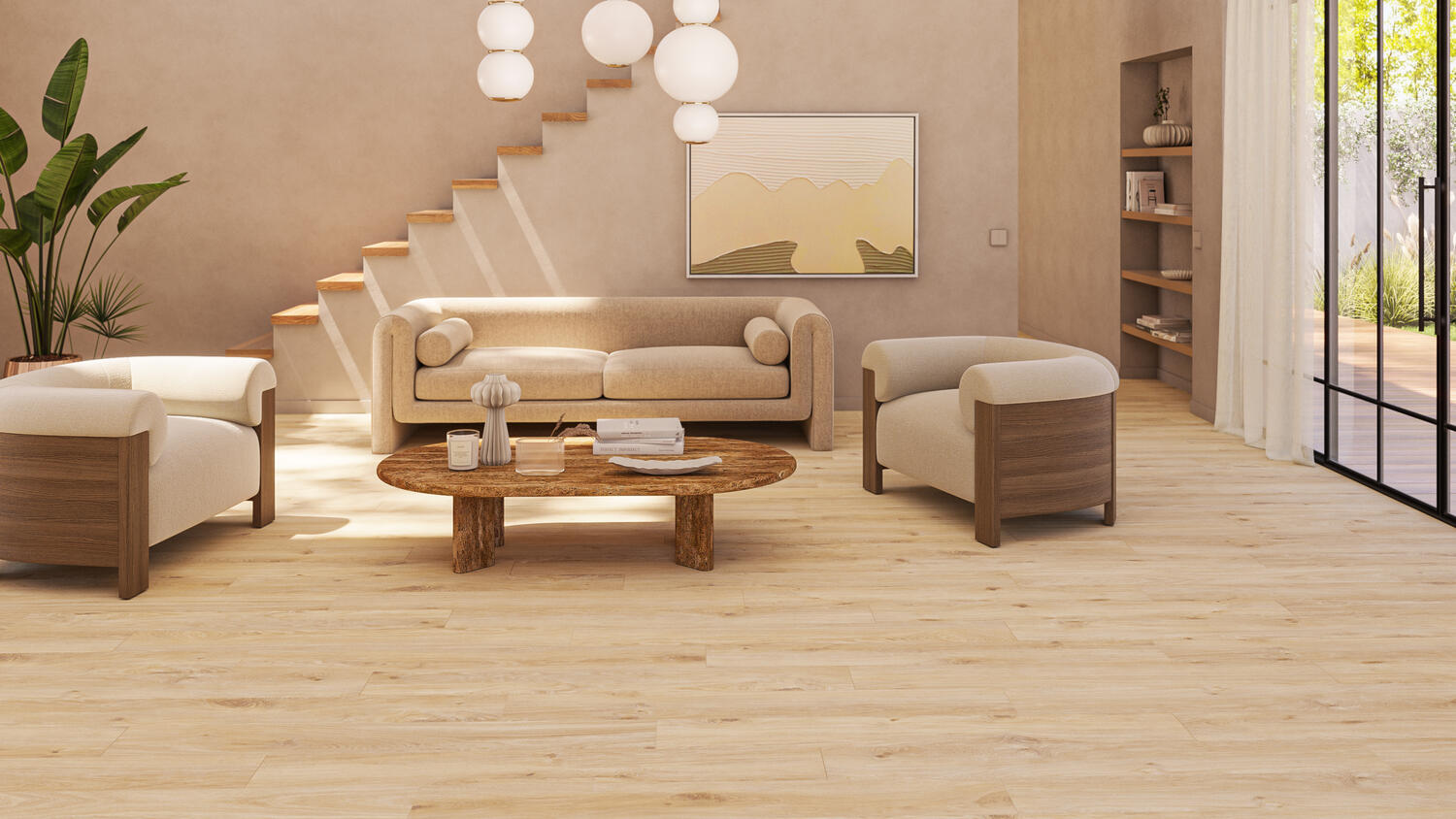
Components of Laminate Flooring
- Wear Layer: Provides scratch and moisture resistance.
- Design Layer: High-resolution image of wood or stone.
- Core Layer: Dense fiberboard made from recycled wood fibers.
- Backing Layer: Prevents moisture absorption from the subfloor.
Types of Laminate Flooring
- High-Pressure Laminate (HPL): More durable and resistant to wear.
- Direct-Pressure Laminate (DPL): Budget-friendly but less durable.
- Water-Resistant Laminate: Enhanced resistance to moisture but not fully waterproof.
Vinyl Plank vs Laminate: Key Differences
| Feature | Vinyl Plank | Laminate Flooring |
|---|---|---|
| Material | Synthetic PVC | Wood fiber core with synthetic top |
| Water Resistance | 100% Waterproof | Water-resistant but not waterproof |
| Durability | Highly durable | Moderately durable |
| Appearance | Realistic wood and stone looks | Authentic wood-like texture |
| Comfort | Softer underfoot | Harder surface |
| Installation | Easy DIY options | Click-lock, floating floor |
| Maintenance | Low maintenance | Requires more care with moisture |
| Cost | Generally higher | Budget-friendly |
| Lifespan | 15-25 years | 10-15 years |
| Eco-friendliness | Less eco-friendly | More sustainable |
Pros and Cons of Vinyl Plank Flooring
Pros of Vinyl Plank Flooring
- 100% Waterproof
- Ideal for kitchens, bathrooms, and basements.
- Durability
- Resists scratches, dents, and stains.
- Comfortable Underfoot
- Softer and quieter than laminate.
- Low Maintenance
- Easy to clean with routine sweeping and mopping.
- Variety of Styles
- Realistic textures and colors available.
Cons of Vinyl Plank Flooring
- Higher Cost
- More expensive compared to laminate.
- Environmental Concerns
- Made from synthetic materials that are not biodegradable.
- Repair Challenges
- Damaged planks need full replacement.
Pros and Cons of Laminate Flooring
Pros of Laminate Flooring
- Affordable Pricing
- Budget-friendly compared to vinyl plank.
- Realistic Appearance
- High-quality designs with authentic wood textures.
- Scratch Resistance
- Great for homes with pets and kids.
- Easy Installation
- Click-lock systems for DIY installation.
Cons of Laminate Flooring
- Water Sensitivity
- Susceptible to swelling and warping if exposed to moisture.
- Noisy Underfoot
- Can sound hollow without proper underlayment.
- Shorter Lifespan
- Typically lasts around 10-15 years.
Which Flooring is Best for Specific Areas of Your Home?
| Room | Recommended Flooring |
|---|---|
| Kitchen | Vinyl Plank |
| Bathroom | Vinyl Plank |
| Living Room | Laminate |
| Basement | Vinyl Plank |
| Bedroom | Laminate |
| High-Traffic Areas | Vinyl Plank |
Cost Comparison: Vinyl Plank vs Laminate
| Expense Category | Vinyl Plank Flooring | Laminate Flooring |
|---|---|---|
| Materials Cost | $2 – $7 per sq. ft. | $1 – $5 per sq. ft. |
| Installation Cost | $1 – $3 per sq. ft. | $0.50 – $2 per sq. ft. |
| Maintenance Cost | Low | Moderate |
Verdict: If budget is your primary concern, laminate flooring is the better option.
Installation: DIY or Professional?
Both vinyl plank and laminate flooring offer DIY-friendly installation methods.
Vinyl Plank Installation:
- Click-lock, glue-down, or loose lay methods.
- Suitable for uneven subfloors.
Laminate Installation:
- Click-lock floating floor system.
- Requires an underlayment to prevent moisture damage.
Maintenance and Cleaning Requirements
Vinyl Plank Flooring:
- Sweep regularly and mop occasionally with a damp mop.
- Use mild detergents to avoid damage.
Laminate Flooring:
- Sweep daily and use a slightly damp mop.
- Avoid excessive moisture to prevent swelling.
FAQs About Vinyl Plank vs Laminate
1. Is vinyl plank flooring better than laminate?
- Yes, especially for moisture-prone areas like kitchens and bathrooms.
2. Can laminate flooring be used in bathrooms?
- It’s not recommended due to its moisture sensitivity.
3. Which is easier to install, vinyl plank or laminate?
- Both have click-lock systems, but laminate is slightly easier for DIYers.
4. Does vinyl plank flooring require underlayment?
- Some vinyl plank types have built-in underlayment, while others may need it for soundproofing.
5. Which flooring is more environmentally friendly?
- Laminate flooring, as it’s made from recycled wood products.
6. Can vinyl plank or laminate flooring be refinished?
- No, damaged areas must be replaced.
Conclusion: Vinyl Plank vs Laminate – Which Should You Choose?
Ultimately, the decision between vinyl plank vs laminate depends on your specific needs:
- Choose vinyl plank if you need waterproof, durable flooring.
- Choose laminate if you’re looking for a budget-friendly, stylish option for dry areas.
By considering factors such as water resistance, budget, and aesthetic preference, you can select the flooring that best suits your lifestyle and home requirements.
