

Power tools can make home projects faster, more accurate, and less physically demanding. However, the wide range of drills, saws, sanders, and accessories can make choosing a first tool confusing. Beginners do not need to purchase an entire workshop at once. A small collection of versatile tools can handle many common repairs and improvements.
The key is to select tools according to the projects you plan to complete and learn how to operate each one safely.
Start With a Drill/Driver
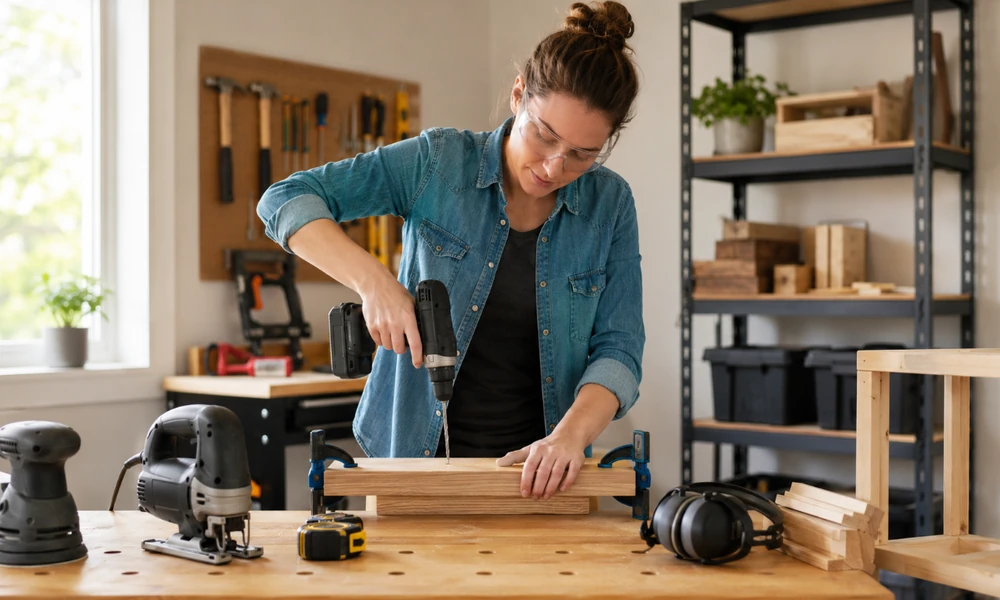
A cordless drill/driver is one of the most useful tools for a beginner. It can drill holes and drive screws for tasks such as assembling furniture, installing shelves, hanging curtain rods, and building simple wooden projects.
Variable speed provides better control, while an adjustable clutch helps prevent screws from being driven too deeply. Beginners should also purchase a basic selection of drill bits and driver bits suitable for wood, metal, or masonry.
Before drilling into a wall, check for electrical wiring, plumbing, and other hidden obstacles. Use the correct bit for the material and remove the battery before changing accessories.
Consider an Impact Driver
A drill and an impact driver may look similar, but they perform different jobs. An impact driver delivers rotational impacts that help drive long screws and other fasteners into dense material.
It can be useful for building decks, assembling sturdy furniture, or completing projects that involve many structural screws. However, it may be unnecessary for occasional light-duty work. Beginners can usually start with a drill/driver and add an impact driver when their projects require greater fastening power.
Always use impact-rated bits because standard bits may crack or break under repeated impacts.
Choose a Saw Based on the Project
A circular saw makes fast, straight cuts in lumber and sheet material. It is useful for shelving, framing, and larger woodworking projects. A jigsaw is easier to maneuver and can make curved cuts, openings, and short straight cuts.
Whichever saw you choose, use a blade designed for the material. A dull or incorrect blade can produce rough cuts and increase the chance of binding or kickback.
Support the material securely, keep the cutting path clear, and wait for the blade to stop completely before setting the tool down. Never hold a small workpiece in one hand while cutting with the other.
Add a Sander for Better Finishes
A random-orbit sander can smooth rough wood, prepare surfaces for paint, and remove minor imperfections. It is generally easy for beginners to control and leaves fewer visible sanding marks than some other powered sanders.
Begin with a coarser abrasive only when substantial material must be removed, then progress to finer grits. Keep the sander moving and avoid pressing down heavily. Excessive pressure can create uneven surfaces and slow the tool.
Wood dust can affect breathing and create a cleanup problem, so connect a dust-collection bag or vacuum when possible and wear appropriate respiratory protection.
Corded or Cordless?
Cordless tools are convenient, portable, and suitable for most household projects. Tools that share the same battery platform can reduce the number of batteries and chargers needed.
Corded tools provide continuous power and may be appropriate for long sessions or demanding work. Their main disadvantages are reduced mobility and the need to manage an electrical cord around the work area.
When comparing tools, consider comfort, weight, controls, battery life, and whether replacement accessories are readily available.
Build Safe Habits From the Beginning
Read the manufacturer’s instructions before using any power tool. Wear eye protection, and add hearing and respiratory protection when the task requires them. Tie back long hair, remove dangling jewelry, and avoid loose clothing.
Secure workpieces with clamps rather than relying on your hands. Keep both hands away from blades and bits, maintain stable footing, and disconnect the power source before changing accessories or clearing a jam.
Do not operate tools when tired, distracted, or working in a wet environment. Inspect cords, batteries, guards, blades, and bits before every use.
A beginner’s power-tool collection should grow with experience. Start with a dependable drill/driver, practice on scrap material, and add specialized tools as projects demand them. Careful preparation and safe technique matter far more than owning the largest collection.
This post was written by a professional at Anawalt Lumber. Anawalt Lumber is a family-owned lumber yard and hardware store serving Los Angeles for over a century. Known for quality lumber yard Malibu CA, contractor supplies, hardware, and a full-service nursery, Anawalt provides personalized service for homeowners and licensed contractors. From job pricing and bulk discounts to special-order materials with fast delivery, Anawalt is your trusted local building supply partner in Malibu, West LA, and Hollywood.
