

Power outages can be inconvenient anywhere, but losing electricity on a larger property in the Texas Hill Country can create a much bigger problem. For homeowners in Dripping Springs, a power outage may affect far more than the lights and refrigerator inside the house. A well pump may stop working. Electric gates may not open. Security equipment may go offline. A workshop, barn, detached garage, or guest house may have its own electrical needs.
For homeowners with acreage, backup power requires more planning because there are often more systems and structures to consider. A portable generator interlock kit can provide a practical way to connect a properly sized portable generator to selected household circuits without installing a permanently mounted standby generator.
When it comes to adding a portable generator interlock kit for backup power, homeowners in Dripping Springs, Texas can work with Tejas Electric for professional electrical services.
The key is making sure the system is designed around the actual electrical needs of the property. Instead of trying to power everything, an electrician can help determine which circuits are most important during an outage and how those circuits can be supplied safely by a portable generator.
Why Backup Power Gets More Complicated on Dripping Springs Acreage Properties
A typical suburban home might have one main electrical panel and a relatively straightforward list of essential loads. An acreage property can be very different.
A larger Dripping Springs property may include a primary residence, detached garage, workshop, barn, well equipment, outdoor lighting, electric gates, security cameras, a pool, guest accommodations, or other structures. Some of these systems may be located a considerable distance from the home’s main electrical panel.
That creates several questions homeowners need to answer before choosing a generator backup solution.
How much power is actually required? Which equipment needs to operate continuously? Which circuits can remain off during an outage? Where will the portable generator be located? How far is it from the electrical service equipment? Are there additional panels or electrical feeders serving detached structures?
A portable generator may be perfectly capable of handling the home’s essential electrical loads, but that doesn’t necessarily mean every circuit should be connected to generator power.
The goal is usually to establish a practical list of priorities.
Start With the Systems That Matter Most
During a prolonged outage, keeping every electrical device in the home operating may not be realistic with a portable generator. Instead, homeowners should identify the equipment that provides the greatest benefit during an emergency.
For many Dripping Springs acreage properties, that could include:
- Well pumps
- Refrigerators
- Freezers
- Security systems
- Electric gates
- Interior and exterior lighting
- Internet equipment
- Network equipment
- Phone charging
- Selected HVAC equipment
- Medical or other essential equipment where applicable
- Communications equipment
A well pump deserves particular attention on rural and semi-rural properties. If the property depends on a private well, losing electricity can mean losing access to water. That makes the well pump an important part of the backup-power conversation.
Refrigerators and freezers are another obvious priority. During an extended outage, keeping food cold can prevent unnecessary waste.
Security equipment can also become particularly important when a property is spread across several acres. Cameras, alarm equipment, networking equipment, and other security systems may need electricity even when less important loads are switched off.
Electric gates are worth considering as well. A gate that normally opens with a motor may become a significant inconvenience if there is no power available to operate it.
How Do You Decide Which Circuits Should Receive Generator Power?
The first step is to look at the electrical panel and identify the circuits serving the equipment homeowners consider essential.
This is where a professional electrical assessment can be useful.
Rather than simply choosing circuits based on convenience, an electrician can evaluate the expected electrical demand and determine whether the portable generator can handle the selected loads. Starting current also matters. Motors used by well pumps, refrigerators, freezers, and other equipment can temporarily require more power when they start.
For example, a generator might have enough running capacity for several appliances but still struggle if multiple motor-driven loads start simultaneously.
Homeowners should also think about what they realistically need during an outage. Perhaps the workshop doesn’t need power at all, while the well pump and refrigerator are essential. Maybe a detached guest house can remain without electricity while the main house receives backup power.
This type of prioritization can make a portable generator system much more practical.
Generator Inlet Placement Matters
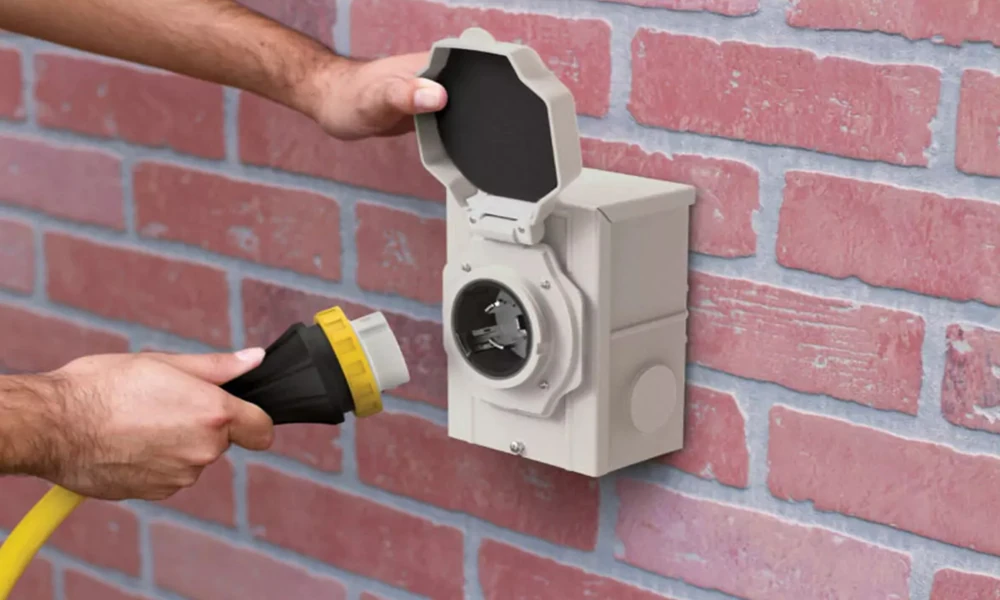
A portable generator needs a safe and convenient connection point to the home’s electrical system. That is where a properly installed generator inlet comes into the picture.
On some properties, the ideal generator location may not be directly next to the electrical panel. The panel could be inside the house while the generator needs to operate outside in an appropriate location.
In that situation, the location of the generator inlet and the wiring between the inlet and electrical panel need to be carefully considered.
Cable routing, conductor sizing, weather exposure, accessibility, and the distance between the generator and electrical equipment can all affect the installation.
The generator itself also needs to be operated in a safe location away from doors, windows, and other areas where exhaust could enter the home. Carbon monoxide from a portable generator can be extremely dangerous, so generator placement should never be treated as an afterthought.
A professional installation can help homeowners establish a practical connection point while keeping the equipment accessible when an outage occurs.
Detached Garages, Workshops, Barns and Guest Houses Add Another Layer
Acreage properties often have electrical systems that extend well beyond the main house.
A detached workshop might have its own panel. A barn may have lighting and receptacles. A guest house could have an independent electrical load. A garage may contain equipment that normally operates on dedicated circuits.
This raises an important question: Does the homeowner actually need those structures to have generator power?
If the answer is yes, the electrician needs to understand how those structures are connected to the property’s electrical system.
Simply adding a portable generator connection to the main residence does not automatically mean every detached structure will receive backup power.
Depending on the property’s electrical configuration, additional considerations may include subpanels, feeders, disconnects, load calculations, and the way different buildings are supplied.
For acreage homeowners living in Texas, this is one reason a whole-property electrical assessment can be worthwhile before purchasing a generator or interlock kit.
Can the Existing Electrical Panel Accommodate an Interlock?
Not every electrical panel should be assumed to be ready for a generator interlock installation.
An electrician needs to identify the panel, evaluate its configuration, determine whether an appropriate interlock solution is available, and assess the overall electrical system.
The panel also needs to work with the generator connection and the selected circuits.
The purpose of an interlock is to provide a mechanical means of preventing the utility supply and generator supply from being energized in a way that could create a dangerous backfeed condition. The equipment must be compatible with the electrical panel and installed correctly.
This is not an area where homeowners should improvise.
If the existing panel is outdated, damaged, improperly configured, or otherwise unsuitable, the right solution may involve electrical upgrades rather than simply installing an interlock.
Portable Generator vs. Permanently Installed Standby Generator
A permanently installed standby generator can be an excellent solution for homeowners who want automatic backup power, but it isn’t the only option.
For some acreage homeowners, a portable generator paired with a properly installed inlet and interlock system can offer a more practical approach.
One advantage is flexibility. The homeowner can use the portable generator when needed and store it when it isn’t required. A portable generator can also represent a different level of investment than a permanently mounted standby generator.
However, portable generators require homeowner involvement. Someone needs to move the generator into position, connect it correctly, fuel it, start it, monitor it, and shut it down safely.
That means the homeowner should be comfortable operating the equipment before an emergency occurs.
A backup system is most useful when everyone knows how it works before the lights go out.
Don’t Forget Surge Protection
A power outage isn’t necessarily the only electrical concern during severe weather.
Power restoration, switching events, lightning, and other electrical disturbances can potentially affect sensitive equipment. Homes with extensive networking equipment, televisions, computers, security systems, smart-home devices, well controls, and other electronics may benefit from discussing whole-house surge protection with an electrician.
Surge protection does not make electronics immune to every electrical event, and it should not be treated as a substitute for proper generator installation. Instead, it can be one component of a broader strategy for protecting electrical equipment.
For an acreage property with a significant amount of electronics or electrically controlled equipment, it makes sense to evaluate surge protection at the same time as the generator backup system.
Is a Portable Generator Interlock Installation a DIY Project?
This is an important question, particularly for homeowners who are comfortable with tools and consider themselves handy.
There are plenty of home projects that make sense as do-it-yourself work. Installing or modifying electrical equipment that connects a portable generator to a home’s electrical system is a different matter.
A generator interlock installation involves the home’s electrical service equipment, generator connection, circuit selection, wiring, grounding and bonding considerations, and protection against potentially dangerous backfeed conditions.
A mistake can put the homeowner, utility workers, electricians, or other people at risk.
There can also be code and permitting requirements depending on the property and installation.
For those reasons, this type of electrical work should be left to a qualified, properly licensed Texas electrician rather than treated as a weekend DIY project.
A handy homeowner can still play an important role by determining what equipment matters most, identifying how the property is used, choosing a portable generator that meets the household’s needs, and learning the manufacturer’s operating procedures.
The electrical installation itself is where professional expertise matters.
Tejas Electric can evaluate the property’s electrical system, discuss the homeowner’s backup-power priorities, and determine what may be required for a portable generator interlock installation.
Test the System Before Storm Season
The worst time to discover a problem with a backup-power system is during an actual outage.
Dripping Springs, Texas homeowners should consider having their generator connection and selected circuits professionally inspected and tested before severe weather creates an emergency.
Testing can help confirm that the generator inlet, interlock, breakers, selected circuits, and other components are functioning as intended.
It also gives homeowners an opportunity to practice the process.
Knowing where the generator is stored, how it should be positioned, how the inlet connection works, which breakers should be used, and which appliances should remain off can make an outage considerably less stressful.
It is also a good time to check the portable generator itself. Fuel, oil, batteries, extension accessories where appropriate, and other maintenance items should not be ignored simply because the generator hasn’t been used recently.
A Practical Backup-Power Strategy for Dripping Springs Acreage Homes
A portable generator interlock system isn’t about trying to make a portable generator operate an entire property exactly as it would under normal utility power.
Instead, the goal is to create a practical emergency-power strategy.
For one homeowner, that might mean keeping the well pump, refrigerator, freezer, security system, internet equipment, and a few lighting circuits operating.
Another homeowner might need to prioritize an electric gate, workshop equipment, or a detached structure.
Every property is different.
The size of the home, number of buildings, electrical panel configuration, well equipment, generator capacity, electrical loads, and homeowner priorities all influence how the system should be designed.
That is particularly true on larger Dripping Springs properties where electrical equipment may be distributed across multiple buildings.
A professional evaluation can help turn a portable generator from a piece of emergency equipment sitting in storage into a useful part of the property’s overall backup-power plan.
For homeowners considering a portable generator interlock kit, Tejas Electric provides professional electrical services for properties in Dripping Springs and surrounding Hill Country communities. A properly planned and professionally installed system can help homeowners understand exactly what their portable generator can power, which circuits should receive priority, and how to operate the system safely when utility power is unavailable.
Before storm season arrives, it is worth taking the time to look beyond simply buying a generator. Evaluate the property’s essential electrical loads, determine which systems matter most, inspect the electrical panel, plan the generator inlet location, consider detached structures, address surge protection, and have the installation professionally tested.
For an acreage homeowner, that preparation can make the difference between having a generator that sits unused during an outage and having a backup-power system that is ready to support the essential systems the property depends on.
