

A healthy air conditioner on a muggy afternoon should be dripping. As warm indoor air crosses the cold evaporator coil, moisture condenses out of it, and that water runs through the condensate line to a drain or an outside outlet. When the system has been running for a while on a sticky day and that outlet is dry, something has already gone wrong. Either the coil is too cold and freezing the water in place, the line is blocked and backing water into the pan, or the system is not pulling moisture out of the house at all.
That clue says a lot about cooling problems on the Gulf Coast. Long seasons of heat and heavy humidity mean an AC spends most of the year removing water as well as heat, and many failures announce themselves through moisture first: a wet ceiling, a frosted line, a house that reads cool on the thermostat but feels clammy.
When the symptom points past a filter or a tripped switch, Houston AC repair from SG HVAC SHEETMETAL covers the diagnosis and the fix through its HVAC Installation and Repair service, whether that means a failed part or a new system. Its AC Maintenance and Tune Ups catch the slow problems behind most repeat calls, and HVAC Maintenance Plans keep those visits on a regular schedule for homes in Houston, Sugar Land, Richmond, Katy, Missouri City, Bellaire and nearby neighborhoods. AC service can be requested directly through the company website.
The map below follows six common symptoms, from safe homeowner checks to technician work. Before looking at any equipment, switch the system off at the thermostat, and shut off power at the breaker or outdoor disconnect before opening any panel.
Warm Air From the Vents
Likely causes:
- A thermostat set to fan only or heat, or a dead thermostat battery
- A clogged filter choking airflow across the coil
- An outdoor unit that has stopped running because of a tripped breaker, failed capacitor or contactor
- Low refrigerant from a leak
Quick checks: confirm the thermostat mode, replace the filter, and see whether the outdoor fan is spinning. A silent or humming outdoor unit is a technician call. Low refrigerant always means a leak somewhere, and under federal rules anyone adding or removing refrigerant or connecting gauges must hold EPA Section 608 certification, so topping off without finding the leak is not a fix.
Ice on the Coil or Refrigerant Lines
Ice usually means the coil got too cold, either from too little air moving across it or too little refrigerant moving through it.
- Restricted airflow: a dirty filter, closed supply vents, or a dirty coil
- Refrigerant problems: a leak or a metering device that is not working properly
- Blower problems: a weak motor or a failing capacitor
Turn the cooling off and run the fan alone to thaw the coil, and never chip at the ice. If it refreezes after a new filter and open vents, the cause is inside the system and needs a technician.
Water Leaking From the Indoor Unit
The most common moisture complaint in humid climates usually has a simple cause:
- Algae and sludge clogging the condensate line
- A primary pan inside the unit that has cracked or rusted through
- A unit sitting out of level so water runs away from the drain
- A coil that froze and is now melting faster than the pan can handle
- A failed condensate pump in homes where water has to be lifted out
Homeowners can check whether the secondary pan under an attic unit is holding water, and whether a float switch has shut the system off. Repeated clogs, a rusted primary pan, or water reaching the ceiling call for professional service.
Cool but Sticky Indoors
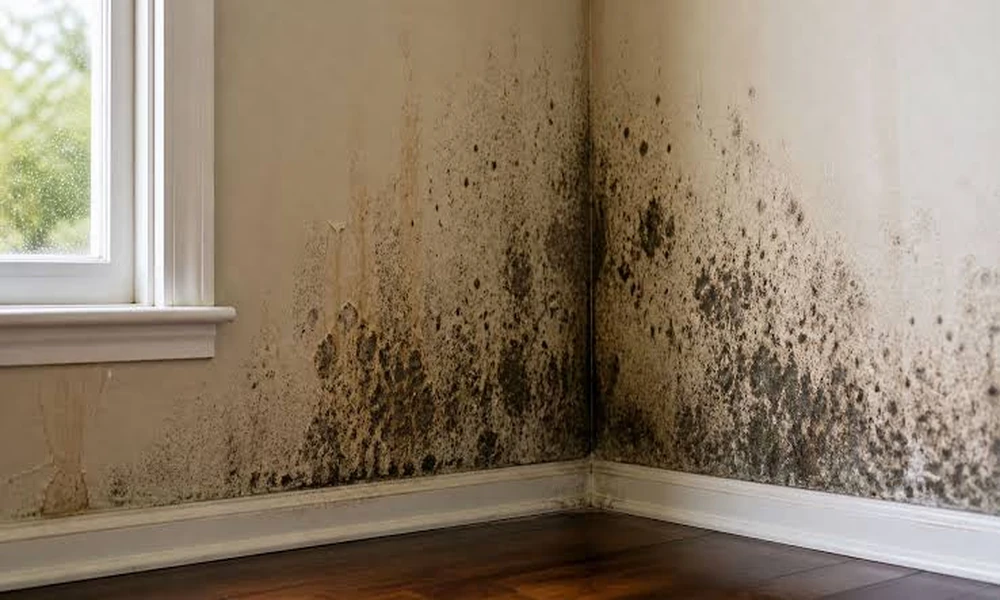
A house can hit its temperature setting and still feel damp. The EPA advises keeping indoor relative humidity under 60 percent and ideally between 30 and 50 percent to discourage mold, and a cheap hygrometer will show whether you are in that range.
- An oversized system cools the air quickly and shuts off before it removes much moisture
- A fan left in the on position can push water from a wet coil back into the house
- Outside air leaking in faster than the system can dry it
Setting the fan to auto is a quick test. If humidity stays high, sizing, blower settings or added dehumidification are technician territory.
Short Cycling
Starting and stopping every few minutes wears parts and leaves moisture behind. Common causes:
- A thermostat placed near a supply vent, lamp or sunny window
- A frozen coil or dirty condenser tripping safety controls
- Electrical faults or an oversized unit
Moving heat sources away from the thermostat is a reasonable first step. Anything involving safety switches or electrical components belongs to a technician.
Running Nonstop Without Catching Up
Some of this is normal on the hottest days, but not a system that misses its setting even in the evening.
- Dirty outdoor coil that cannot shed heat
- Low refrigerant
- Worn compressor or failing components
- Equipment too small for the home, or a system near the end of its useful life
Hosing debris off the outdoor coil gently, with power off, is a fair homeowner task. When the diagnosis lands on a failing compressor, an old refrigerant type, or a unit sized wrong from the start, the repair versus replacement question becomes real, and a technician should weigh it for that specific system.
Why the Same Problems Keep Coming Back
Most of these symptoms start as something small: a filter left too long, a drain line slowly filling with growth, a coil collecting dust, a capacitor weakening through one more summer. Where the AC works most of the year, small things grow quickly and tend to fail on the hottest days, when every technician is booked.
A proper tune up targets exactly those weak points. It clears and treats the condensate line before it overflows, checks the pans, cleans the coils, tests capacitors and electrical connections, measures system pressures and temperatures, and confirms airflow. A maintenance plan makes that visit routine rather than an afterthought. The goal is to find the clogged drain while it is still a slow drip and the weak part while it still starts, so the next diagnosis map you need to read is a short one.
