

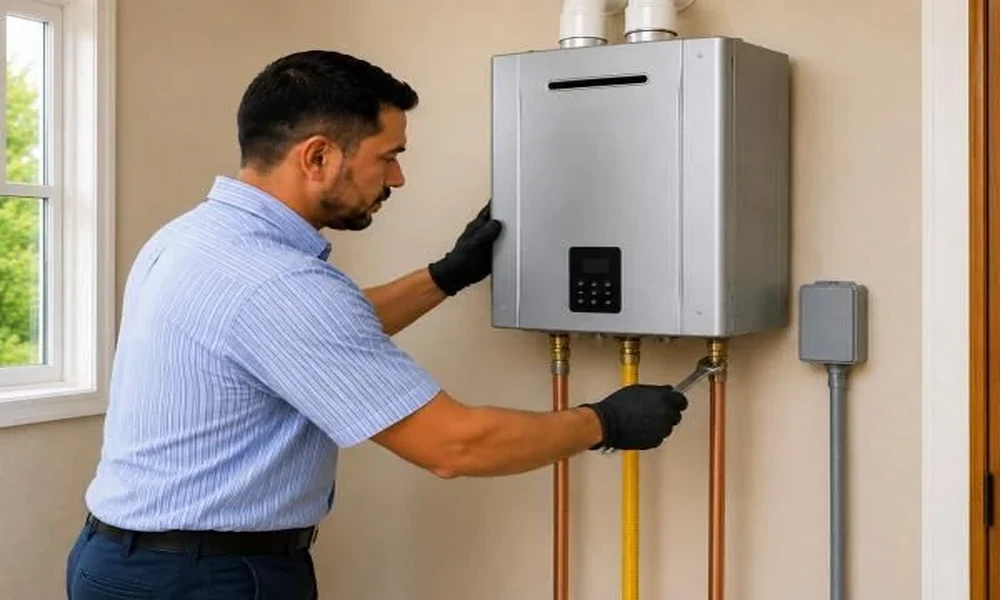
Nobody plans for a cold shower. The tank that has quietly served your family for a decade gives out on a Tuesday morning, and suddenly you are making a big purchase in a hurry. Homeowners who are shopping for Leander water heaters do much better when they arrive with a few smart questions already answered. The right choice depends on your household, your home, and your budget, not on whichever model happens to be in stock.
Use these seven questions as a decision guide. Answer them honestly and the right unit will usually become obvious.
1. How Old Is the Water Heater I Have Now?
Age is the first and simplest clue. According to the U.S. Department of Energy, a typical storage tank lasts about 10 to 15 years, while a tankless unit can last around 20 years. Look for the manufacturing date on the label near the bottom of the tank. The first four characters of the serial number often show the month and year.
If your heater is nearing the end of that range and has started leaking, rumbling, or producing rusty water, replacement usually makes more sense than repair. A small puddle at the base of a tank means the inner lining has likely failed, and no part swap will fix that.
2. How Much Hot Water Does My Household Really Use?
Think about your busiest morning. Two showers, a dishwasher cycle, and a load of laundry might all overlap. Size matters here, and bigger is not always better.
- Too small: you run out of hot water halfway through the rush.
- Too large: you pay to keep extra gallons hot around the clock.
A plumber can match capacity to your real habits, including family size, bathroom count, and any soaking tub. This single step prevents most “we bought the wrong one” regrets.
3. Should I Choose a Tank or Go Tankless?
This is the question everyone asks, and the honest answer is that both are good in the right home.
A storage tank costs less up front and handles several uses at once. Its downside is standby heat loss, meaning it keeps heating stored water even when nobody needs it. A tankless unit heats water only on demand, so that waste disappears. The Department of Energy says tankless models can be 8 to 34 percent more efficient than storage tanks, and ENERGY STAR certified versions may save $100 or more each year. The tradeoffs are a higher purchase price and a flow limit of roughly 2 to 5 gallons per minute, so a large household might need more than one unit.
You can see the full side-by-side comparison in the Energy Saver guide to choosing a water heater, which also covers heat pump and solar options.
4. What Fuel Source Fits My Home?
Gas and electric systems each have their own rules. Switching fuel types can require new venting, a larger gas line, or electrical upgrades, and those costs belong in your budget from day one. Tankless gas units in particular often need a bigger gas pipe because they burn so much fuel in a short burst. Ask for a written quote that lists installation work separately from the unit price so nothing surprises you later.
5. Is a Heat Pump Water Heater Worth Considering?
If your home runs on electricity, this option deserves a look. Heat pump water heaters move heat instead of generating it, and the Department of Energy reports they can be two to three times more efficient than conventional electric resistance models, with ENERGY STAR versions saving almost $300 per year.
They do have requirements. They need a space that stays within roughly 40 to 90 degrees Fahrenheit year round and plenty of surrounding air. Since garages and attics in this part of Texas can run hotter than that in summer, installation location needs careful thought.
6. What Is My Water Doing to the Equipment?
Central Texas is known for hard water. Minerals settle at the bottom of a tank as sediment, forcing the heater to work harder and shortening its life. Tankless units can scale up inside as well. If you notice crusty buildup on faucets or cloudy water, mention it when you request a quote. Pairing a new heater with a water softener or filtration system, and scheduling routine flushing, can protect your investment for years.
7. Who Is Installing It, and What Happens Afterward?
A great heater installed poorly will still cause trouble. Ask whether the installer is licensed, whether permits and code requirements are handled for you, and whether the old unit is hauled away. Ask about warranty coverage on both the equipment and the labor. A trustworthy plumber will explain each answer in plain language and never rush you.
Easy Ways to Cut Your Hot Water Bill Starting Today
Whatever you decide, the Department of Energy shares small steps that pay off immediately. Water heating typically takes up 14 to 18 percent of a home’s utility bill, so these habits add up:
- Lower your thermostat setting to 120 degrees Fahrenheit, which can save roughly $36 to $61 a year.
- Insulate hot water pipes and, on older tanks, the tank itself.
- Install low-flow showerheads, which are inexpensive and can cut water use noticeably.
- Fix dripping hot taps promptly.
Ready When You Are
Replacing a water heater does not have to feel stressful. Take these seven questions with you, compare quotes side by side, and choose the unit that suits your home rather than the one that is easiest to grab. For a free estimate and honest advice, call Plumb Intended at (512) 630-9968. The family-owned team in Georgetown serves Leander and nearby Central Texas communities, and they will help you pick the right system before the next cold shower finds you.
